Rare Instances When a Number 11 Batsman Top Scored in a Men’s Test Innings
Cricket is a game of glorious uncertainties, where the unexpected becomes the unforgettable. And what’s more unexpected than a number 11 batsman—often seen as the walking wicket, the bowler who’s just there to hold the bat like it’s a foreign object—top scoring for their team? It’s like finding out your cat can do calculus. Rare, but oddly delightful.
In the storied history of Test cricket, there have been a handful of these eyebrow-raising, jaw-dropping moments where the last man standing (or swinging) has defied logic and top scored. So, let’s dive into these 12 rare instances where the number 11 batsman stole the show, proving that cricket is indeed the ultimate drama generator.
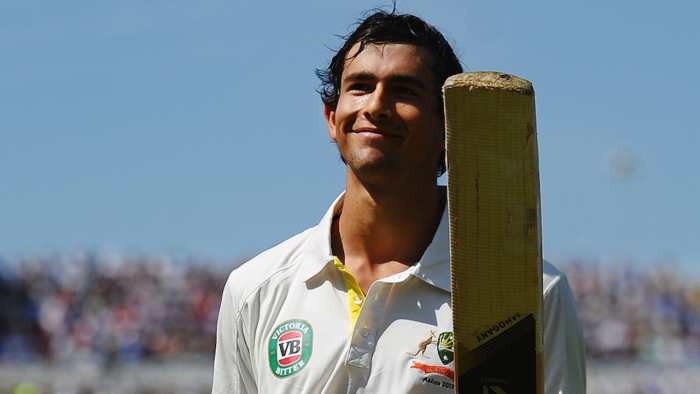
A batter at the end of a lineup is not expected to score runs.
1. Nathan Lyon – 14 Runs (Australia vs South Africa, Newlands)
It was the first Test match of Australia's 2011-12 tour of South Africa. The match took place at Newlands in Cape Town. Batting first, Australia put up a decent 284 runs on the board, with 151 of those runs coming from the blade of their skipper, Michael Clarke. In response, South Africa was bowled out for a low score of only 96 runs.
Having a healthy first innings lead of 188 runs, Australia shot out for a paltry 47 runs with their number 11 batter, Nathan Lyon, scoring 14. This was 29.7% of the team's total runs for that innings.
Unfortunately for Australia, the target for South Africa was a mere 236. The home team easily reached this with eight wickets in hand.
2. Thomas McKibbin – 16 Runs (Australia vs England, Kennington Oval)
Way back in 1896, the third Test match between England and Australia at the Kennington Oval in London saw a very rare feat achieved by Australia’s number 11 batter, Thomas McKibbin (in the fourth innings).
Opting to bat first, England was shot out for a poor first innings total of just 145 runs. But despite a poor effort with the bat, England managed to gain a healthy first innings lead of 26 runs after Australia was held to just 119.
In their second innings, England crumbled again and were bowled out for just 84. This set the visitors with just 111 runs to win. But what transpired thereafter left everyone shell-shocked. Australia was bundled out for just 44 runs, and their number 11 batter, Thomas McKibbin, scored 16. This was 36.36% of the team’s total runs in the fourth innings.
3. Asif Masood – 30 Runs (Pakistan vs West Indies, Gaddafi Stadium)
In the 1975, during the first Test match between Pakistan and the West Indies at the Gaddafi Stadium in Lahore, Pakistan was held to just 199 runs. Their number 11 batter, Asif Masood, scored a valuable 30 runs, which was 15.08% of the team’s first innings total.
In reply, West Indies scored 214 and gained a slender 15-run first innings lead. Pakistan, in their second innings, amassed 373 for 7, with Mushtaq Mohammad scoring a brilliant 123. Chasing 359 for the win, West Indies were 258 for 4 when the match officials called it quits. The game ended in a draw.
4. Talha Jubair – 31 Runs (Bangladesh vs India, MA Aziz Stadium)
In the 2004-05 Bangladesh vs India Test series, the second Test match at Chittagong saw a number 11 batter become a top scorer. Batting first, India posted a massive 540 runs on the board. Both Gautam Gambhir and Rahul Dravid put up hundreds.
In reply, Bangladesh was bowled out for 333, trailing India by 207 runs. India decided to rally. In Bangladesh’s second innings, the team never really got going. They were all out for a paltry 124 runs. Their number 11 batter, Talha Jubair, was the top scorer with 31 runs. This was 25% of the team’s total runs in that innings.
5. Mudalige Amerasinghe – 34 Runs (Sri Lanka vs New Zealand, Asgiriya Stadium)
It was the first test match between hosts Sri Lanka and New Zealand that took place at the Asgiriya Stadium in Kandy. The visitors opted to bat first, and they put up 276 runs on the board.
In reply, Sri Lanka fell short by 61 runs in the first innings, but the lead could have been even bigger had Mudalige Amerasinghe (Sri Lanka’s number 11) not managed to score with 34 runs. This was 15.81% of the team’s first innings total.
New Zealand, in their second innings, managed 201 for 8. They gave Sri Lanka a target of 263. Unfortunately for the hosts, they were bundled out for just 97 runs in 27.3 overs.
6. Steve Harmison – 42 Runs (England vs South Africa, Newlands)
The third Test match between South Africa and England at the Newlands Cricket Ground in Cape Town once again witnessed a very rare moment. Opting to bat first on a good wicket, the home team plundered the English bowlers and amassed 441 runs, with Jacques Kallis scoring 149.
In response to that big first innings score, England crumbled under pressure; they were shot out for just 163 runs. With a massive first innings lead of 278 runs, South Africa decided to bat again, this time scoring 222 for 8. This set England a mammoth score of 501 needed to win.
In their second innings, England were much better with the bat, but they folded at 304 runs. Their number 11 batter, Steve Harmison, scored 42. This was 13.82% of the total runs scored by England in that particular innings.
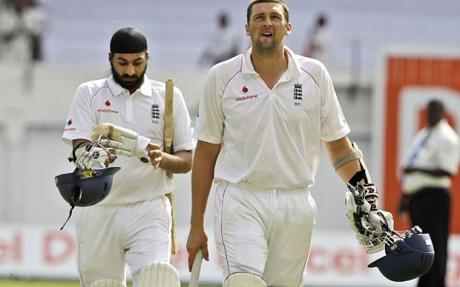
A batter getting dismissed feels devastating when a team needs runs.



7. Saqib Mahmood – 49 Runs (England vs West Indies, National Cricket Stadium, Grenada)
In one of the more recent Test matches, a number 11 batter was the top scorer for his team in an innings. It was the third Test match between hosts West Indies and England in Grenada.
Battting first, England were tottering at 9 for 114 when number 11 batter Saqib Mahmood walked out to bat. He, along with Jack Leach, stitched a valuable 10th wicket partnership of 90 runs. Mahmood was the top scorer in that innings with 49. This was 24.02% of the total runs scored by England in the first innings.
In reply, West Indies scored 297 with wicket-keeper batter Joshua Da Silva scoring a brilliant 100. England, in their second innings, shot themselves in the foot and were skittled for just 120. This set West Indies a target of just 28 runs, which was easily chased down by their openers.
8. Frederick Spofforth – 50 Runs (Australia vs England, at MCG)
The first time a number 11 batter scored the most for their team in a Test innings was way back in 1885. It was during a Test match between Australia and England at the iconic Melbourne Cricket Ground.
Opting to bat first, Australia were reeling at 9 for 99 when number 11 batter Frederick Spofforth walked out to bat. He stitched together a valuable 64 runs along with John Trumble (number 8 batter). Out of the 64, 50 runs came off his bat before we was finally bowled by William Attewell. Spofforth had scored 30.67% of the total runs scored by Australia in the first innings.
In reply to Australia’s 163, England batted brilliantly. They amassed 386 runs, gaining a huge lead of 223 runs. The lead was so big that Australia faltered in their second innings. They were bundled out for just 125 runs, handing the visitors a huge victory by 98 runs.
9. Shane Shillingford – 53 Runs (West Indies vs New Zealand, Sabina Park)
In 2014, the first Test match between West Indies and New Zealand saw another rare feat of a number 11 batter lighting up the scoreboard. Opting to bat first, the visitors piled up the runs and scored a massive 508 runs with centuries from Kane Williamson and James Neesham.
West Indies struggled in their first innings. They only managed to score 262 runs, which put them 246 runs behind New Zealand’s first innings total. New Zealand had the option to enforce in the next innings, but they decided to bat again.
In their second innings, New Zealand scored 156 for 8 and set the hosts 403 runs to win. West Indies were never in the game. Despite falling short by a massive 186 runs, their number 11 batter, Shane Shillingford, lit up the fourth innings with an unbeaten 53 off just 29 balls. This was 24.54% of the total runs scored by the team in their second innings.
10. Tim Murtagh – 54 Runs (Ireland vs Afghanistan, Rajiv Gandhi Stadium)
In one of those rare Test matches between Afghanistan and Ireland, there was a rarer moment of the last batter scoring the most.
Ireland decided to bat first, and the decision backfired as they were reeled at 9 for 85 when number 11 batter Tim Murtagh walked out to bat. He, along with George Dockrell, stitched together a more than impressive partnership of 87 runs. Murtagh did the bulk of the scoring and ended up unbeaten with 54 off 75 balls. His 54 runs was 31.4% of the total (172 runs) scored by Ireland in their first innings.
Afghanistan, in their first innings, with the help of Rahmat Shah’s brisk 98, scored 314 runs. This gave them a first innings lead of 142 runs. Ireland, in their second innings, only managed to score 288 runs, giving Afghanistan just 147 runs to win. They easily chased this number down with seven wickets in hand.
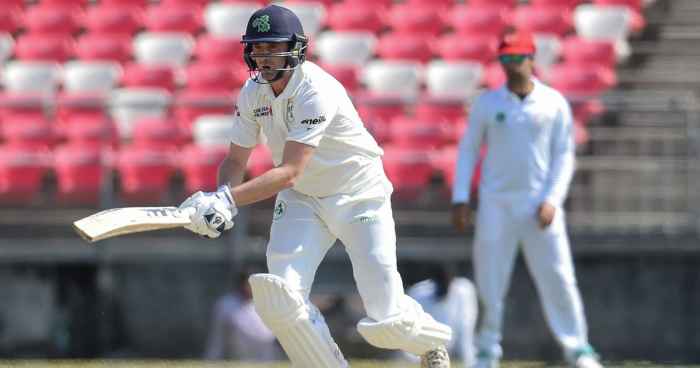
Batting a century is always thrilling.
11. Albert Volger – 62 Runs (South Africa vs England, Newlands)
The Newlands Cricket Ground in Cape Town has seen a number 11 batter lead in runs on three occasions. This particular instance was the very first time it occured.
In the fifth Test match between South Africa and England in 1906, England batted first. They were bundled out for 187 runs. South Africa would then go 233 for 9 when Albert Volger, their number 11 batter, walked out to bat. He, along with the number 10 batter, stitched together a brilliant 94 runs as South Africa managed to score 333.
Volger was the aggressor with his 62 runs. This made up 18.62% of the total runs scored by the South Africans in the first innings. In reply, England once again crumbled with the bat and were shot out for just 130. This gave the South Africans a big win by an innings and 16 runs.
12. Ashton Agar – 98 Runs (Australia vs England, Trent Bridge)
It is always rare when the last batter in a lineup scores the most runs. In a Test match between England and Australia at Trent Bridge in 2013, this rare event became even more unique. It was the first time ever that a number 11 batter scored the most during their Test debut.
Batting first, the hosts England managed to score 215 runs with useful contributions by a few batters. However, none were able to score a half-century. In reply, Australia went 9 for 117 when debutant Ashton Agar walked out to bat. He put on a show along with Phillip Hughes, who was batting well from the other end.
Both left handers amassed an incredible total of 163 runs. Agar scored 98 of those runs; he was only two short of scoring a century. With a total of 280 for Australia, Agar’s 98 was 35% of the total runs scored by his team in the first innings.
England managed to score 375 runs, with Ian Bell scoring a lovely 109. This required Australia to score 311 runs to win the Test. Unfortunately, after a solid 84 runs, Australia started to lose wickets. In the end, were all out by the time they hit 296, losing by just 14 runs.
Closing Thoughts
Cricket is a game where the unexpected becomes the unforgettable, and these rare instances of number 11 batsmen top scoring are a testament to that. Whether it’s Nathan Lyon’s 14 or Ashton Agar’s 98, these moments remind us why we love this beautiful game.
So, the next time you see a number 11 walk out to bat, don’t write them off—they might just surprise you. After all, cricket is the only sport where even the tailenders can have their day in the sun.
This content reflects the personal opinions of the author. It is accurate and true to the best of the author’s knowledge and should not be substituted for impartial fact or advice in legal, political, or personal matters.
© 2023 Ronald Daniel Sampson